

Wisconsin Security Deposit Laws: What Landlords Can Charge for Cleaning
In Wisconsin, a landlord can deduct cleaning costs from your security deposit only when the unit needs cleaning beyond normal wear and tear. Routine cleaning, routine carpet cleaning, and routine painting can’t be taken out of your deposit, even if your lease says you’ll pay for them.
Landlords have 21 days after your lease ends to return your deposit or send an itemized list of what they kept and why. Here’s how the rules work under Wisconsin Administrative Code ATCP 134.06 and Wis. Stat. § 704.28, and how to clean so a cleaning charge never comes up.
How Long Does a Landlord Have to Return a Security Deposit in Wisconsin?
A Wisconsin landlord has 21 days to return your security deposit, minus any lawful deductions. When the 21 days start depends on how the tenancy ends:
- You move out when the lease ends: 21 days from the lease end date.
- You move out early: 21 days from the lease end date, or from the date a new tenant’s lease begins if the landlord re-rents the unit sooner.
- You stay past the lease end date: 21 days from the date the landlord learns you’ve moved out.
If the landlord keeps any part of the deposit, the itemized statement has to arrive within that same 21-day window. Give your landlord a forwarding address in writing so the check and statement actually reach you.
What Can a Landlord Deduct From a Security Deposit in Wisconsin?
Wisconsin limits deductions to amounts reasonably necessary to cover a short list of items. A landlord can deduct for:
- Tenant damage, waste, or neglect of the premises, beyond normal wear and tear
- Unpaid rent you’re legally responsible for
- Unpaid utilities owed under the rental agreement, or government-utility bills the landlord becomes liable for
- Unpaid monthly municipal permit fees the landlord becomes liable for
- Anything else listed in a separate document titled “Nonstandard Rental Provisions” that the landlord identified with you before you signed
A landlord cannot deduct for normal wear and tear, or for losses you can’t reasonably be held responsible for. A nonstandard rental provision can’t override that rule. Signing one that charges you for normal wear and tear doesn’t make the deduction legal.
Can a Landlord Charge for Cleaning in Wisconsin?
Yes, but only for cleaning beyond normal wear and tear. Wisconsin law doesn’t list “cleaning” as its own deduction. A cleaning charge has to fall under tenant damage, waste, or neglect, which means the unit was left dirtier than normal living would explain.
Wisconsin’s code spells out a few things that don’t qualify. A landlord can’t deduct for routine painting or routine carpet cleaning when there’s no unusual damage from tenant abuse.
The carpet rule has a catch. A lease can require you to pay for routine carpet cleaning, but the landlord still can’t take that cost out of your deposit or collect it in advance. Any advance payment counts as part of your security deposit and stays refundable.
In practice, cleaning charges usually come up when a tenant leaves behind things like:
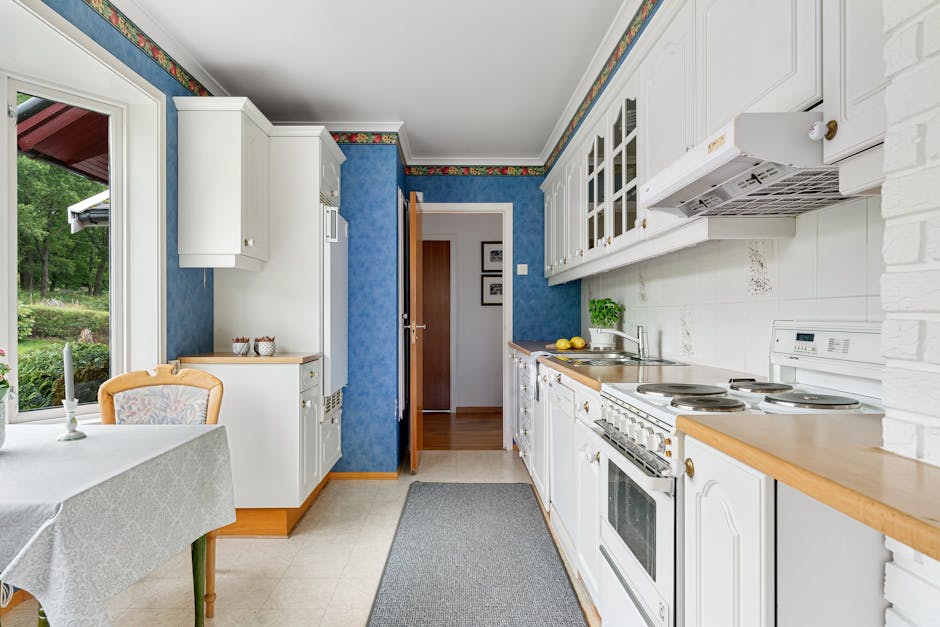
- Grease buildup on the stove, oven, or range hood
- Food left in the refrigerator or freezer
- Soap scum, mildew, or grime in the tub, shower, or toilet
- Pet waste, heavy pet hair, or odors
- Trash, belongings, or furniture left in the unit
- Stains or spills beyond normal use
Normal Wear and Tear vs. Damage: What’s the Difference?
Wisconsin law uses the term “normal wear and tear” but doesn’t define it in detail. It generally means the deterioration that happens when a tenant cleans regularly and takes reasonable care of the unit. If you and your landlord can’t agree, a small claims judge decides.
| Area | Usually normal wear and tear | Usually chargeable |
|---|---|---|
| Carpet | Light traffic wear, flattened pile | Pet stains, burns, large spills, odors |
| Walls | Minor scuffs, a few small nail holes | Large holes, crayon or marker, unapproved paint colors |
| Kitchen | Light wear on counters and appliances | Baked-on grease, food left in the fridge, burns |
| Bathroom | Worn grout, dulled fixtures | Heavy mildew, soap scum buildup, grime left behind |
| Floors | Minor scratches from regular use | Deep gouges, water damage from spills |
| General | Faded paint, loose door handles | Trash or belongings left behind, broken fixtures |
These are common examples, not legal rules. What counts depends on how long you lived there and the unit’s condition when you moved in.
Why Your Move-In Check-In Sheet Matters
Your check-in sheet is the best protection against being charged for someone else’s mess. Before accepting a security deposit, a Wisconsin landlord must tell you in writing that you can do two things by a deadline at least 7 days after your tenancy starts:
- Inspect the unit and report any existing damage or defects.
- Request a list of damages or defects charged to the previous tenant’s deposit.
If you request that list, the landlord must provide it within 30 days, or within 7 days after notifying the previous tenant of their deductions, whichever is later.
Note dirty conditions on your check-in sheet, not just damage. Grimy appliances, a dirty oven, or a mildewed shower documented at move-in can’t fairly be charged to you at move-out. Take dated photos or video of every room and keep copies of everything you send.
What If You Disagree With a Cleaning Deduction?
If a landlord keeps any part of your deposit, they must send a written statement that describes each item of damage or other claim and the amount withheld for each one. A landlord may not intentionally misrepresent or inflate a claim, including the cost of repairs.
If a deduction looks wrong, these are the usual steps:
- Compare the statement to your records. Check it against your check-in sheet, move-in photos, and move-out photos.
- Write to your landlord. Name each deduction you dispute, explain why, and set a reasonable deadline for a response. Keep a copy.
- File a complaint. You can contact the Wisconsin Department of Agriculture, Trade and Consumer Protection (DATCP).
- Consider small claims court. Under Wis. Stat. § 100.20(5), a tenant who wins may recover twice the amount wrongfully withheld, plus costs and reasonable attorney’s fees.
In Dane County, the Tenant Resource Center offers free guidance and sample letters for security deposit disputes.
How to Clean So You Avoid a Cleaning Deduction
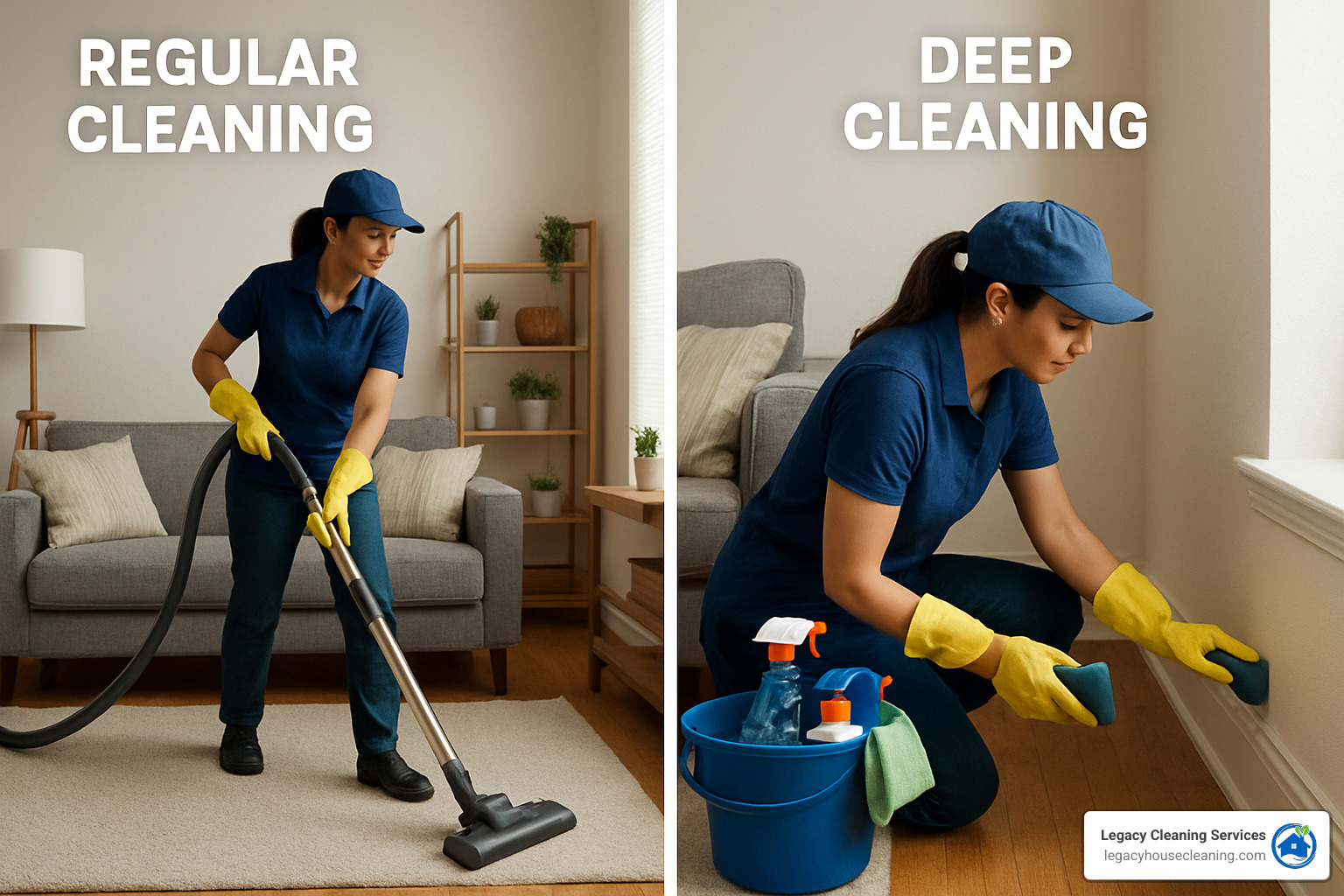
The simplest way to avoid a cleaning charge is to leave the unit as clean as it was on your check-in sheet. Focus on the areas landlords inspect most closely:
- Kitchen: degrease the oven, stovetop, and range hood; empty and wipe out the refrigerator and freezer; wipe inside every cabinet and drawer
- Bathrooms: scrub the tub, shower, toilet, and sink; remove soap scum and mildew
- Floors: vacuum carpet thoroughly; sweep and mop hard floors, including under appliances where you can
- Walls and trim: wipe scuffs, fingerprints, and baseboards
- Windows: clean sills and tracks
- Everything else: remove all trash, belongings, and furniture
Then photograph every room after you finish, and schedule a walk-through with your landlord if they’ll do one. For a room-by-room version, use our move-out cleaning checklist.
When Should You Hire a Move-Out Cleaning Service?
A professional clean makes sense when your deposit is on the line and time is short. That’s common in Madison, where a large share of leases turn over in mid-August.
 Consider hiring help when:
- Your move-out date and your move-in date overlap
- The oven, bathrooms, or floors need heavy detail work
- You’re moving out of a larger unit or one you’ve lived in for several years
- You want before-and-after documentation of a professional clean
A professional move-out cleaning service can bring the unit back to move-in condition before your walk-through. Keep the receipt with your move-out photos in case a cleaning deduction is disputed later.
Sources
This article is general information, not legal advice. For help with a specific dispute, contact the Tenant Resource Center or a Wisconsin housing attorney.

Share this article
Related Posts



Follow us
A quick overview of the topics covered in this article.
- How Long Does a Landlord Have to Return a Security Deposit in Wisconsin?
- What Can a Landlord Deduct From a Security Deposit in Wisconsin?
- Can a Landlord Charge for Cleaning in Wisconsin?
- Normal Wear and Tear vs. Damage: What’s the Difference?
- Why Your Move-In Check-In Sheet Matters
- What If You Disagree With a Cleaning Deduction?
- How to Clean So You Avoid a Cleaning Deduction
- When Should You Hire a Move-Out Cleaning Service?
- Sources
Latest articles